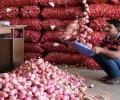
The government's subsidised onion sale initiative, launched on September 5, has led to price drops in major cities within days, the consumer affairs ministry said on Saturday. In Delhi, retail onion price fell from Rs 60 to Rs 55 per kg, while Mumbai saw a decrease from Rs 61 to Rs 56 per kg. In Chennai, the retail price reduced from Rs 65 to Rs 58 per kg, the ministry said in a statement.

Many people in the city fear that even going to markets could pose a threat and departmental stores have started reporting a gap in demand and supply of commodities.
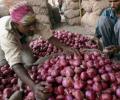
The Centre on Thursday began the first phase of retail sales of onion at a subsidised rate of Rs 35 per kg to provide relief to Delhi-NCR and Mumbai consumers from rising prices of the kitchen staple. NCCF and NAFED, which are maintaining a buffer stock of 4.7 lakh tonne onion on behalf of the government, will undertake the retail sale through their own stores and mobile vans. Onion will be sold at 38 retail points in Delhi-NCR and Parel and Malad in Mumbai.
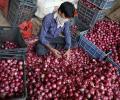
In a significant move to control spiralling onion prices ahead of the festive season, the government will transport 1,600 tonnes of buffer stock via railways from Maharashtra to Delhi - the first such initiative using rail transport for the kitchen staple. The special rake, dubbed 'Kanda Express', will depart from Maharashtra's Lasalgaon Railway Station and reach Delhi's Kishanganj Railway Station on October 20, Consumer Affairs Secretary Nidhi Khare announced on Thursday. The government expects this bulk movement to help stabilise prices in the Delhi-NCR region, where buffer stock onions are currently being sold at a subsidised rate of Rs 35 per kg.
Residents of Delhi and NCR region will get a taste of culinary skills of Tihar jail inmates as bakery products prepared by them will be available in most shops and stores across the city.

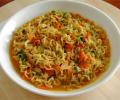
Maggi banned in Delhi for 15 days.

The complex responds to a long standing desire of employees of the Rashtrapati Bhavan and their families living on the President's Estate to have a full-fledged shopping complex that caters to their requirements.
While Reliance Retail did not comment, sources said the company will have to follow order, at least in Delhi.

The Kendriya Bhandar is now stocking the 'Gaunyle'.

In a statement, the department of consumer affairs said about 18,000 kg of tomatoes were sold across Delhi-NCR to retail consumers.

The chief minister met Shah on Wednesday night and held discussions regarding the supply of rice to the state, for its Anna Bhagya scheme, which provides an additional 5 kg of rice for each member of below poverty line families.

The Centre will sell tomatoes at Rs 80 per kg from Sunday, as against Rs 90 per kg earlier, to provide relief to people from high prices of the key kitchen item in retail markets.

The Indian Army on Wednesday issued an advisory asking its personnel not to consume Maggi noodles.

In yet another blow for Nestle India, live larvae and worms have been found in their milk powder in Coimbatore.

The Centre on Friday said it will sell 'Bharat Rice' in the retail market at Rs 29 per kg from next week to give relief to the common man and has also directed traders to disclose rice/paddy stock, as part of its efforts to control prices that have risen by around 15 per cent in the last one year. In a press conference, Union Food Secretary Sanjeev Chopra exuded confidence that these two measures along with the various restrictions of exports will help in cooling down the prices. Seeking to dispel market rumours, he categorically said the government has no plans to lift restrictions on rice exports any time soon.
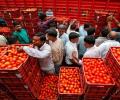
In a first, the Centre will start selling tomatoes at discounted rates in retail markets in the national capital and few other cities from Friday to provide relief to the consumers as the price of the kitchen staple is ruling high at over Rs 200 per kilogram in some parts of the country.
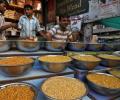
Retail tur dal prices on Monday shot up to Rs 200 per kg despite the government's steps to boost supply and check prices, aggravating consumers' woes.

Chief Minister Siddaramaiah after a Cabinet meeting here on Wednesday said that the government has decided to go for open market tender to procure rice, whose process will start from Thursday.
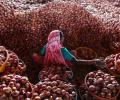
Last week, the Union Cabinet decided to import 1.2 lakh tonnes of onions to improve the domestic supply and control prices, which touched Rs 100 per kg earlier this month.

Earlier in the day, the Kendriya Police Kalyan Bhandar circulated an order stating that 1,026 products manufactured by firms such as Bajaj, Dabur, VIP industries, Eureka Forbes, Jaquar, HUL (foods) and Nestle India will not be sold at CAPF canteens anymore as they are not 'swadeshi' or are prepared from 'purely imported products'.
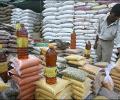
A maximum quantity of 23,340 tonnes was seized in Maharashtra.

With banks struggling to cope with rush to get alternative currency, the government has extended use of old defunct Rs 500 and Rs 1,000 notes for paying household utility bills, fuel, taxes and fees and purchases from co-operative stores till November 24.

The country had imported 5.5 million tonnes of pulses last year.
An order issued by the ministry of home affairs on Wednesday said Deputy Inspector General Meena has been "recalled" by the Central Reserve Police Force. Another CRPF DIG, Rajeev Ranjan Kumar, will be the new CEO of the canteens board with immediate effect for a period of three months, it added.

Authorities faced double-barrel challenge -- strengthening its check and prevention mechanism, and addressing public panic, leading to hoarding of essential items.

A day after Prime Minister Narendra Modi reiterated that social distancing and staying indoors were the only ways to deal with the fast-spreading coronavirus, pictures and videos of people standing in circles and squares to buy essential items like groceries and milk in many states went viral.

Endless cases, piles of files, meagre resources and unrelenting scrutiny... the CBI's life story is all that and more, says Ruchika Chitravanshi
